
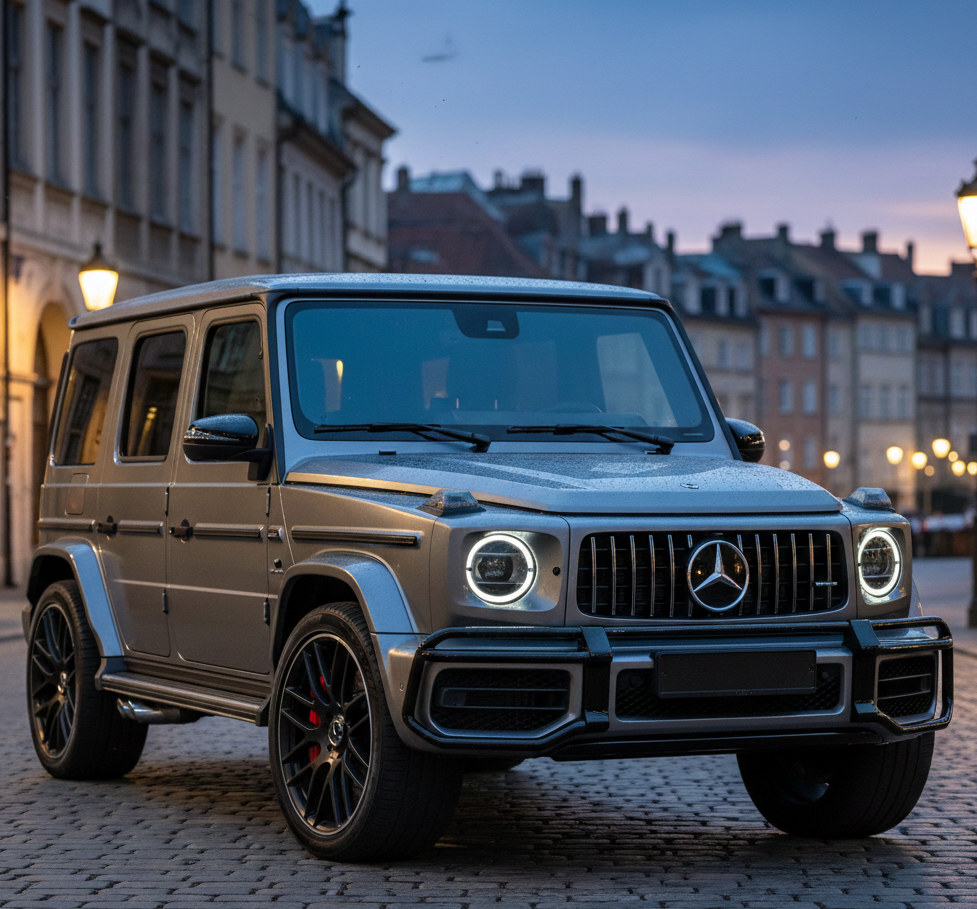
Imagine driving through a busy city street or navigating a tough mountain trail in a vehicle that seems to have come straight from the past, yet feels completely modern. That’s the appeal of the Mercedes G-Wagon, an icon that has stood the test of time for nearly fifty years. Introduced in 1979 as a practical off-roader, it has transformed into a luxury powerhouse while keeping its boxy charm. Why hasn’t its design changed significantly? And why do we appreciate it so much? Let’s explore this enduring story.
Table of Contents
The Birth of an Icon: Origins in 1979
The tale of the G-Wagon starts in the 1970s, spurred by an unusual request from the Shah of Iran, who asked Mercedes to create a sturdy military vehicle. Working with the Austrian company Steyr-Daimler-Puch, Mercedes developed the Geländewagen (which means “terrain vehicle” in German). The first models were unveiled in 1979, hand-built in Graz, Austria, a practice that remains today.
Initially intended for military use, the W460 series came in three body styles: a convertible, a two-door wagon, and a four-door van. Engine choices included a 2.3-liter gasoline four-cylinder, a 2.4-liter diesel four-cylinder, and a five-cylinder diesel. With an 80% climbing ability, 8.3 inches of ground clearance, and a roof load capacity of 440 pounds, it was designed to handle everything from deserts to snowy tundras.
What made it special? Its body-on-frame construction, solid axles, and three locking differentials gave it incredible off-road capabilities. However, its durability quickly attracted civilians. Early achievements, like Jacky Ickx’s 1983 Paris-Dakar Rally victory, solidified its reputation. Imagine a boxy design that prioritized functionality over style—no sleek curves, just straight lines and a silhouette that remains unmistakable.
The Timeless Legacy of the 1979 G-Wagon: An Icon of Adventure and …
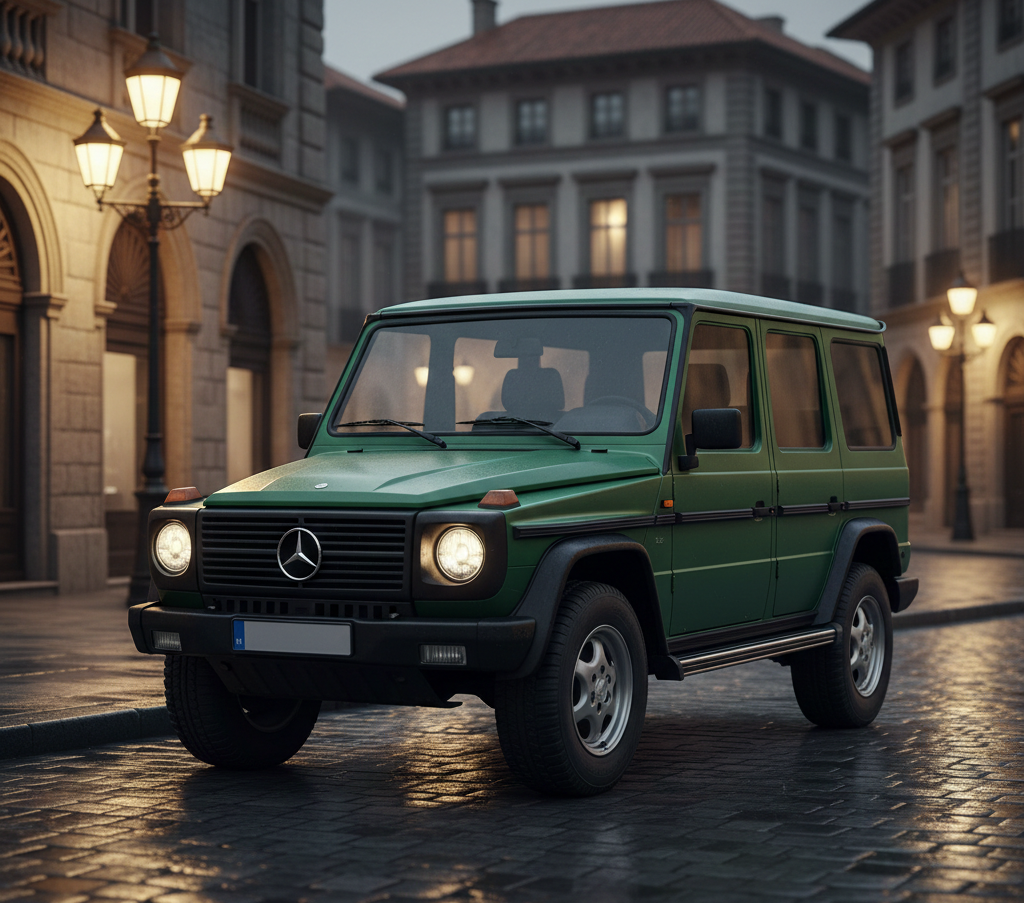
Evolution Without Revolution: Design Changes Over the Decades
As time passed, the G-Wagon’s design underwent some adjustments, but never a complete transformation. In 1990, the W463 series introduced permanent four-wheel drive, wood-trimmed interiors, and optional anti-lock brakes, merging luxury with its rugged foundation. The 1993 500 GE added the first V8 engine, responding to the growing demand for power.
By the 2000s, AMG versions like the G55 AMG featured supercharged V8s, boosting horsepower to 469. However, the boxy shape remained unchanged. A 2007 facelift improved interiors and exteriors, but the core design stayed true. The 2012 update integrated Mercedes’ modern styles inside, while the outside? Still that iconic rectangular shape.
The major change happened in 2018 with the second-generation W463. It became longer and wider for better stability, switched to independent front suspension, and lost weight with high-strength steel and aluminum. Aerodynamics improved slightly, but the appearance? Hardly altered. Round headlights, an exposed spare tire, and that flat-sided look continued.
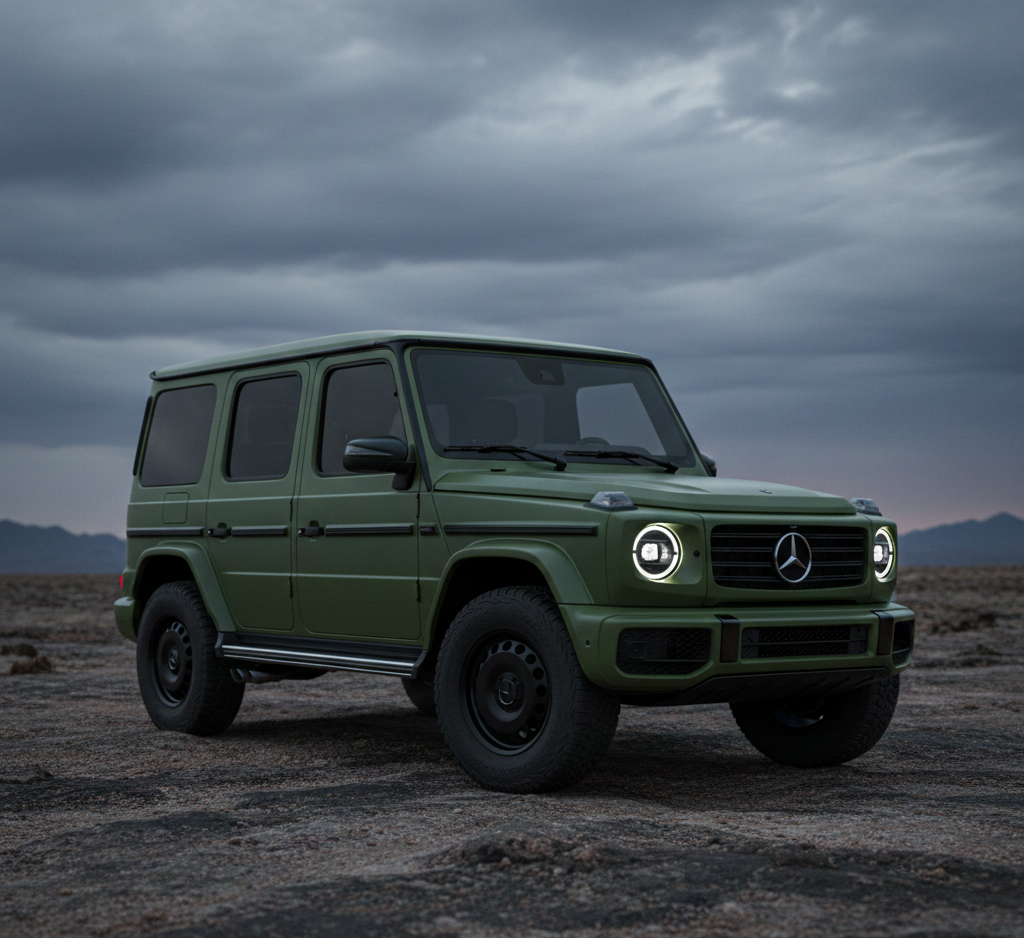
Moving into the 2020s, electrification emerged with the 2024 EQG concept, leading to the 2025 G 580 featuring EQ Technology—four electric motors, yet retaining the same boxy design. For 2026, updates are subtle: new Manufaktur paint colors like Brilliant Blue Mango and hybrid support in models like the G 550 and AMG G 63. Production reached 600,000 units in 2025, proving its lasting appeal.
Why so little change? Mercedes understands that the design is central to its identity. As one engineer noted, it is “evolving continuously over generations,” but has never deviated from its roots.
Comparing the G-Wagon to Other SUVs
To understand the G-Wagon’s consistent design, let’s compare it to other SUVs that have transformed over time. While the G remains boxy, others have embraced curves and aerodynamic shapes.
| Feature | Mercedes G-Wagon | Land Rover Range Rover | Toyota Land Cruiser | Porsche 911 (Analog for Incremental Change) |
|---|---|---|---|---|
| Design Evolution | Minimal; boxy since 1979, subtle facelifts in 1990, 2018 | Dramatic; from boxy 1970s to sleek, minimalist 2020s with floating roofs | Shifted from rugged 1950s to rounded, tech-heavy modern versions | Incremental; air-cooled to water-cooled, but iconic shape preserved since 1963 |
| Off-Road Capability | Three locking diffs, solid axles (military roots) | Advanced terrain response, but more road-focused now | Legendary durability, but design softened for comfort | N/A (sports car), but mirrors G’s philosophy of refinement without revolution |
| Luxury Focus | Rugged luxury; hand-built, V8 options | Opulent interiors, plug-in hybrids | Reliable workhorse, less premium | Performance-oriented evolution |
| Cultural Status | Status symbol, unchanged appeal | Elegant explorer | Everyday adventurer | Timeless sports icon |
| Price Range (2026) | $155,000–$195,000+ | $110,000–$250,000+ | $55,000–$90,000+ | $120,000–$200,000+ |
The Range Rover, once a boxy off-roader like the G, now features sleek lines and hidden door handles for efficiency. The Land Cruiser has rounded out for improved on-road comfort, losing some of its rugged charm. Even the Ineos Grenadier, a competitor to the G, draws from Defender heritage but incorporates modern elements.
In contrast, the Porsche 911, like the G, refines instead of overhauls, showing that gradual changes build loyalty. As Reddit users have pointed out, few brands manage this—most pursue trends, losing their identity. The G-Wagon’s principle? If it works, improve it subtly.
Key Insights: Why the Design Stays the Same
The G-Wagon’s enduring design isn’t due to laziness—it’s a strategy. First, there’s functionality: The boxy shape maximizes interior space, visibility, and off-road angles (up to 35 degrees approaching). Solid axles and locking differentials help it navigate terrains others can’t.
Second, brand identity: Altering the design would risk losing fans. Mercedes has claimed the design is “iconic in every decade,” preserving features like round headlights and a side-hinged tailgate. It’s similar to Coca-Cola’s bottle—timeless.
Third, market demand: Sales are high because it’s one-of-a-kind. In a world of curvy SUVs, the G stands out. Hofele-Design’s kits might enhance it, but purists say: leave it as it is.
From my experience, driving a G feels like controlling a tank—high seating and that distinct door “thunk.” It’s more than just a vehicle; it’s an experience. One person on X remarked, “The G-Wagon was originally designed as a military vehicle… immense durability.”
Durability: Hand-built, ladder-frame chassis lasts for years. Versatility: From military use (employed by 63 armies) to luxury. Innovation Under Skin: Hybrids and electrics in 2026, but the exterior remains unchanged.
This “growth through small improvements” is similar to the 911—refine without overhauling.
Why We Love It: Cultural Impact and Popularity
The G-Wagon isn’t just a vehicle—it’s a cultural phenomenon. From Pope John Paul’s Popemobile in 1980 to celebrity garages today, it represents status. Rappers like Notorious B.I.G. mentioned it in the ’90s; now, it’s featured in Saweetie’s videos and Cristiano Ronaldo’s collection.
What drives this obsession? It combines toughness with luxury—off-road capabilities and Nappa leather interiors. In hip-hop, it symbolizes success: “mansions and Benzes.” Worldwide, it’s favored by elites for its exclusivity; grey-market imports in the U.S. before 2002 added an air of mystery.
Culturally, it’s present in movies, music, and social media. As GQ pointed out, it transitioned from “farm implement” to “status symbol.” We appreciate it for the nostalgia—reminding us of simpler, tougher times—while still adapting. One post on X captures it well: “Check out a nicely specced G-Wagon… it commands respect.”
On a personal note: spotting one in traffic always catches attention. It’s not flashy like a Lamborghini; it exudes authority, like wearing a vintage Rolex in a world of smartwatches.
Looking Ahead to 2026 and Beyond
For 2026, the G-Wagon embraces more hybrids: The G 550’s inline-6 with mild hybrid offers 443 hp, while the AMG G 63 reaches 577 hp. The electric G 580 has a range of 473 km, but sales lag behind gas models due to weight and price. A “little G” is rumored—smaller, lower, but still boxy.
Mercedes hints at additional customizations, like Professional Line accessories. Yet, the design? It’s expected to stay the same, as CEO Ola Källenius suggests preserving the icon. In a fast-paced world, the G’s consistency is a breath of fresh air.
Conclusion
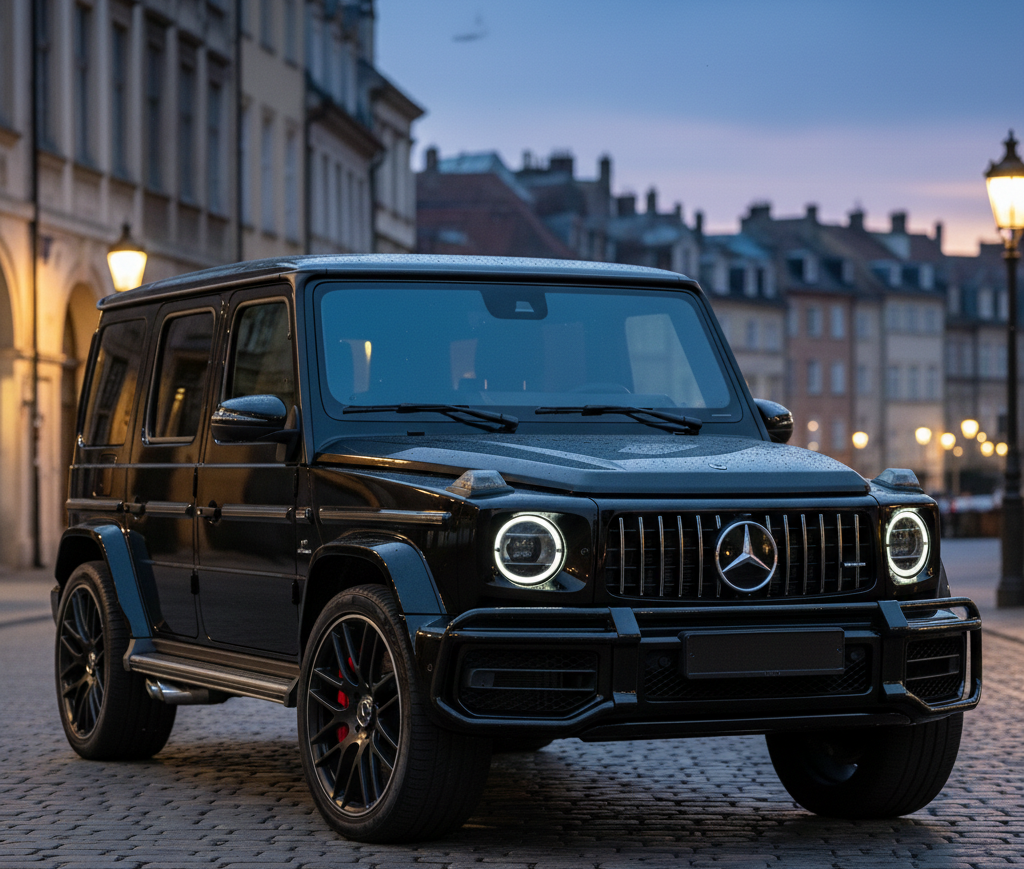
From its military origins in 1979 to its electrified future in 2026, the Mercedes G-Wagon’s design remains resilient against trends because it doesn’t have to change. Its boxy shape signifies durability, identity, and allure that’s challenging to replicate. We love it for the thrill of adventure, the hint of luxury, and the statement it makes—timeless in a disposable world. Whether you’re off-roading or valet-parking, the G-Wagon shows that some things improve by staying the same.
What do you think? Share your G-Wagon experiences in the comments, check out related posts on Mercedes’ official G-Class history, or subscribe for more automotive insights. Drive on!
1 thought on “From 1979 to 2026: Why the G-Wagon’s Design Refuses to Change (and Why We Love It)”