
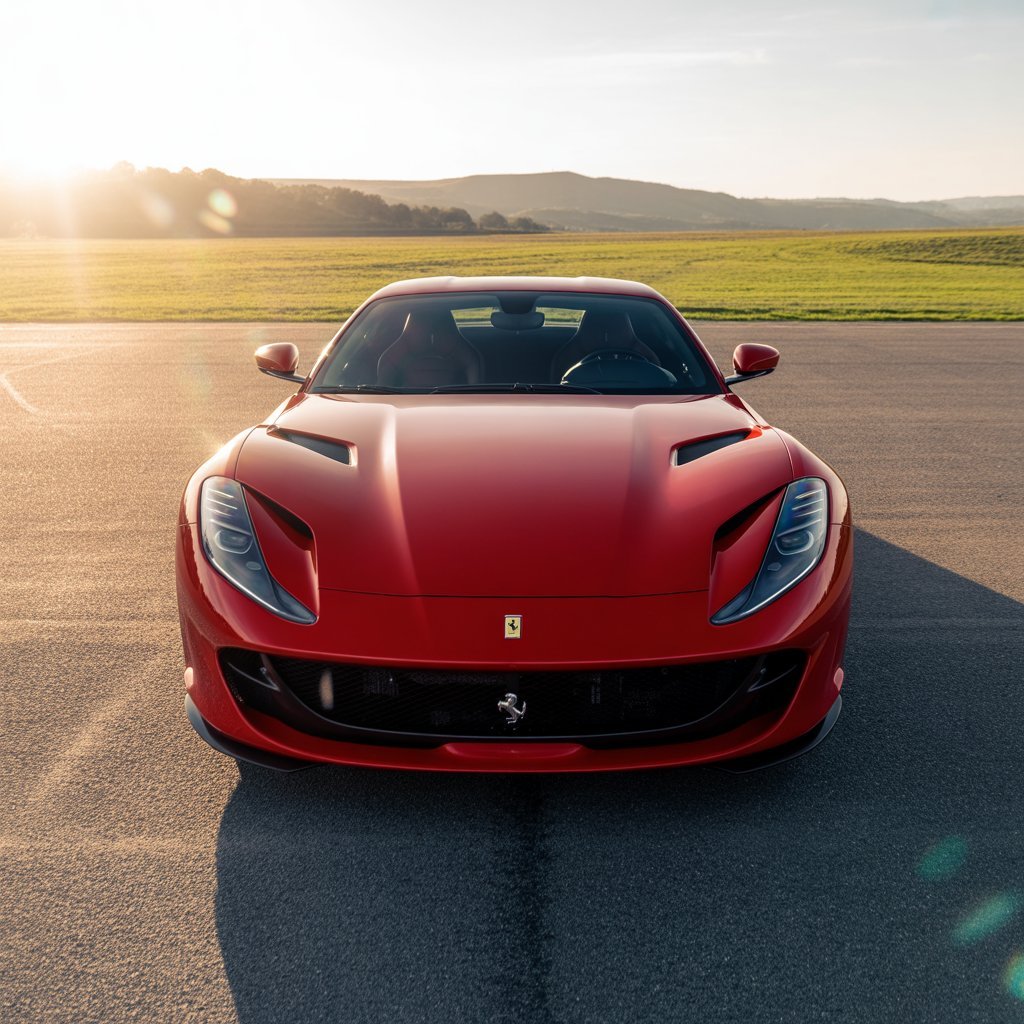
The year is 2026. The automotive landscape has been irrevocably reshaped by electrification, AI, and an ever-tightening grip of emissions regulations. Yet, amidst the silent hum of electric hypercars and the digital symphony of autonomous vehicles, a primal roar occasionally pierces the air. It’s the sound of a naturally aspirated V12, a symphony of internal combustion that, for many, remains the purest expression of automotive passion. And at the heart of this diminishing, yet fiercely loved, segment sits the Ferrari 812 Superfast. But in this brave new world, can a car conceived almost a decade ago truly still be considered the King of V12 Supercars? Or has its crown slipped, replaced by newer, perhaps more technologically advanced pretenders?
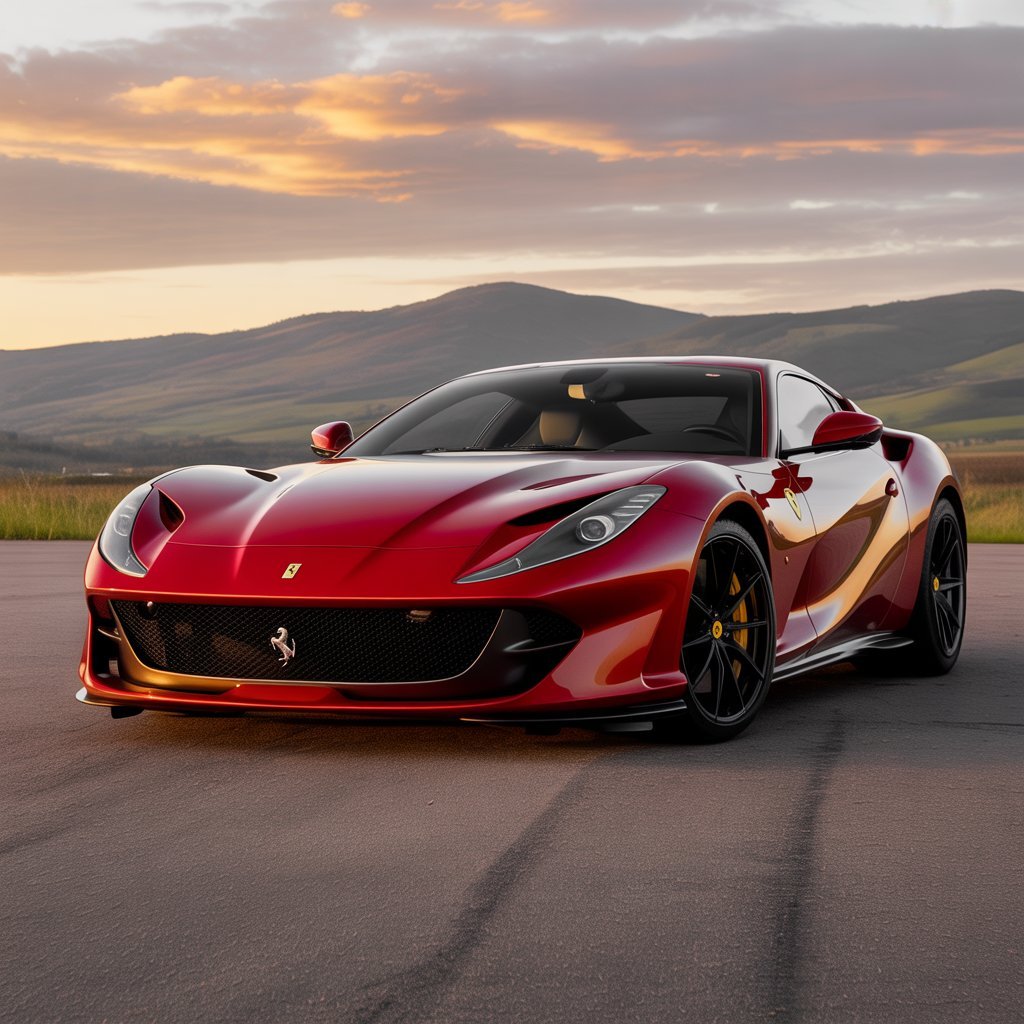
When the Ferrari 812 Superfast first burst onto the scene in 2017, it was a revelation. A direct successor to the F12berlinetta, it pushed the boundaries of what a front-mid-engined V12 grand tourer could be. With its sensational 6.5-liter engine churning out a colossal 789 horsepower (or 800 CV, hence the ‘812’ moniker), it was, at the time, the most powerful naturally aspirated production car engine ever made. Its top speed of over 211 mph (340 km/h) and a 0-60 mph sprint in just 2.9 seconds cemented its status as a true supercar. But time marches on, and the relentless pace of automotive innovation means that yesterday’s king can quickly become today’s nostalgic relic.
Table of Contents
The Reigning Monarch: A Look Back at the Ferrari 812’s Genesis
To understand the Ferrari 812 Superfast’s enduring appeal, we need to appreciate its lineage and the philosophy that forged it. Ferrari has always been synonymous with V12 engines. From the very first 125 S in 1947 to the legendary Daytonas and Testarossas, the V12 has been the beating heart of their most iconic machines. The F12berlinetta set a high bar, but the 812 Superfast elevated the game in every measurable way.
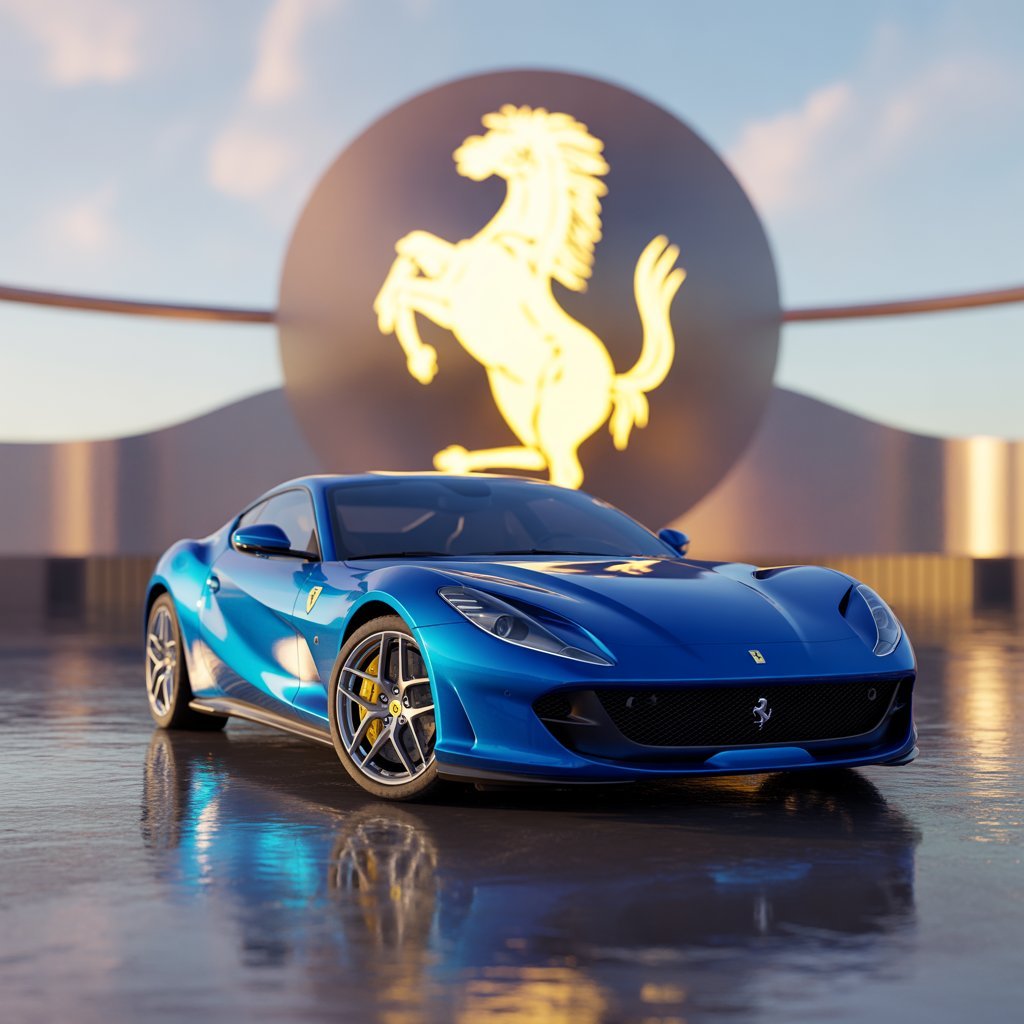
Maranello’s engineers didn’t just tweak the F12; they reimagined it. The engine received a significant bump in displacement and power, but it wasn’t just about raw numbers. Ferrari focused on enhancing the driving experience, introducing features like Electric Power Steering (EPS) for the first time on a Ferrari V12, integrated with other vehicle dynamics controls. This was a bold move, as purists often balk at EPS, fearing a loss of feedback. However, Ferrari’s implementation was lauded for its precision and communication.
Another pivotal innovation was the second generation of Virtual Short Wheelbase (PCV), or rear-wheel steering. This system, first seen on the F12tdf, significantly enhanced agility and responsiveness, making the long, powerful grand tourer feel remarkably nimble in corners. The aerodynamic work was also extensive, with active aero solutions managing airflow to maximize downforce and minimize drag. Every vent, every crease, every curve on the Ferrari 812 was designed with a singular purpose: performance and driver engagement.
The Landscape of 2026: A Challenge to the Throne
Fast forward to 2026. The world of supercars is a very different place. Hybridization is commonplace, and fully electric hypercars like the Rimac Nevera and Lotus Evija offer mind-bending acceleration figures that make even the 812’s sprints seem quaint. Lamborghini has fully embraced hybridization for its V12 successors, with models like the Revuelto showcasing a new era of electrified performance. Mercedes-AMG has potent hybrid powertrains, and even McLaren, a company once staunchly against electrification, now offers hybrid supercars.
So, where does the naturally aspirated Ferrari 812 Superfast fit in?
The Argument Against:
- Emissions & Regulations: This is perhaps the biggest existential threat. Stricter global emissions standards make the production of large-displacement, naturally aspirated engines increasingly difficult and expensive.
- Performance Metrics: While still blisteringly fast, the 812’s 0-60 mph time, once class-leading, is now matched or surpassed by many electrified rivals. The sheer, instantaneous torque delivery of electric motors offers a different kind of thrust.
- Technological Advancement: Modern supercars integrate advanced driver-assistance systems, cutting-edge infotainment, and even more sophisticated active aerodynamics and suspension systems. The 812, while advanced for its time, might feel a generation behind in some tech aspects.
- Fuel Economy (if it matters to you): Let’s be honest, no one buys a Ferrari 812 for its fuel efficiency, but compared to hybrids, its thirst for premium unleaded is undeniable.
The Argument For (and why it might still be King):
- The Unadulterated V12 Experience: This is the 812’s trump card. No electric motor, no turbocharger, no hybrid system can replicate the soaring, linear power delivery, the spine-tingling crescendo of sound, and the visceral connection a naturally aspirated V12 offers. It’s an auditory and tactile experience that is rapidly becoming extinct.
- Driver Engagement: The Ferrari 812 isn’t just fast; it’s engaging. The precise steering, the immediate throttle response, the way the car rotates around you with the rear-wheel steer—it’s a masterclass in driver feedback.
- Emotional Connection: For many enthusiasts, cars like the 812 represent the pinnacle of traditional automotive engineering. There’s a purity to its mechanical symphony that speaks to the soul in a way that electric powertrains, no matter how quick, often cannot.
- Exclusivity & Collectibility: As the era of the pure combustion V12 wanes, cars like the 812 Superfast become increasingly special. Their rarity will only grow, cementing their status as future classics and highly sought-after collector’s items.
- Timeless Design: Pininfarina’s design for the 812 is a blend of aggressive performance and elegant grand touring. It’s a shape that looks fast standing still and has aged remarkably well. Even in 2026, it commands attention.
Personal Experience: The Unforgettable Roar
I had the distinct privilege of spending a memorable weekend with a Ferrari 812 Superfast on some of Europe’s most challenging mountain passes. Forget the spec sheets for a moment; what truly matters is how a car makes you feel.
From the moment the starter button was pressed, the Ferrari 812 announced its presence with a dramatic bark before settling into a purposeful idle. The steering, often criticized in early EPS systems, was surprisingly communicative, weighting up beautifully through sweeping bends.
The sheer, unadulterated power delivery of that V12 is something that words struggle to capture. There’s no turbo lag, just an immediate, relentless surge of acceleration that builds with an addictive intensity as the revs climb towards the 8,900 rpm redline. Each upshift from the seven-speed dual-clutch gearbox was instantaneous, accompanied by a satisfying mechanical ‘thwack’ and a renewed assault on the horizon.
But it wasn’t just about straight-line speed. The chassis, aided by the rear-wheel steering, felt incredibly agile for a car of its size and power. Entering a hairpin, the car would pivot with surprising eagerness, allowing you to get on the power earlier and blast out of the corner with a controlled slide, the traction control system (Side Slip Control 5.0) subtly intervening to keep things exciting but safe. The carbon ceramic brakes provided immense stopping power, hauling the car down from triple-digit speeds with unflappable composure.
What truly struck me, however, was the sound. It’s a mechanical opera, a complex tapestry of induction roar, exhaust growl, and the intricate workings of 12 cylinders at full song. It’s a sound that connects you directly to the machine, to the road, and to the very essence of driving. It’s an emotional experience that a silent EV, no matter how fast, simply cannot replicate. The Ferrari 812 doesn’t just transport you; it transports your senses.
Key Insights: Why the 812 Endures
Several factors contribute to the Ferrari 812 Superfast’s enduring appeal, even in 2026:
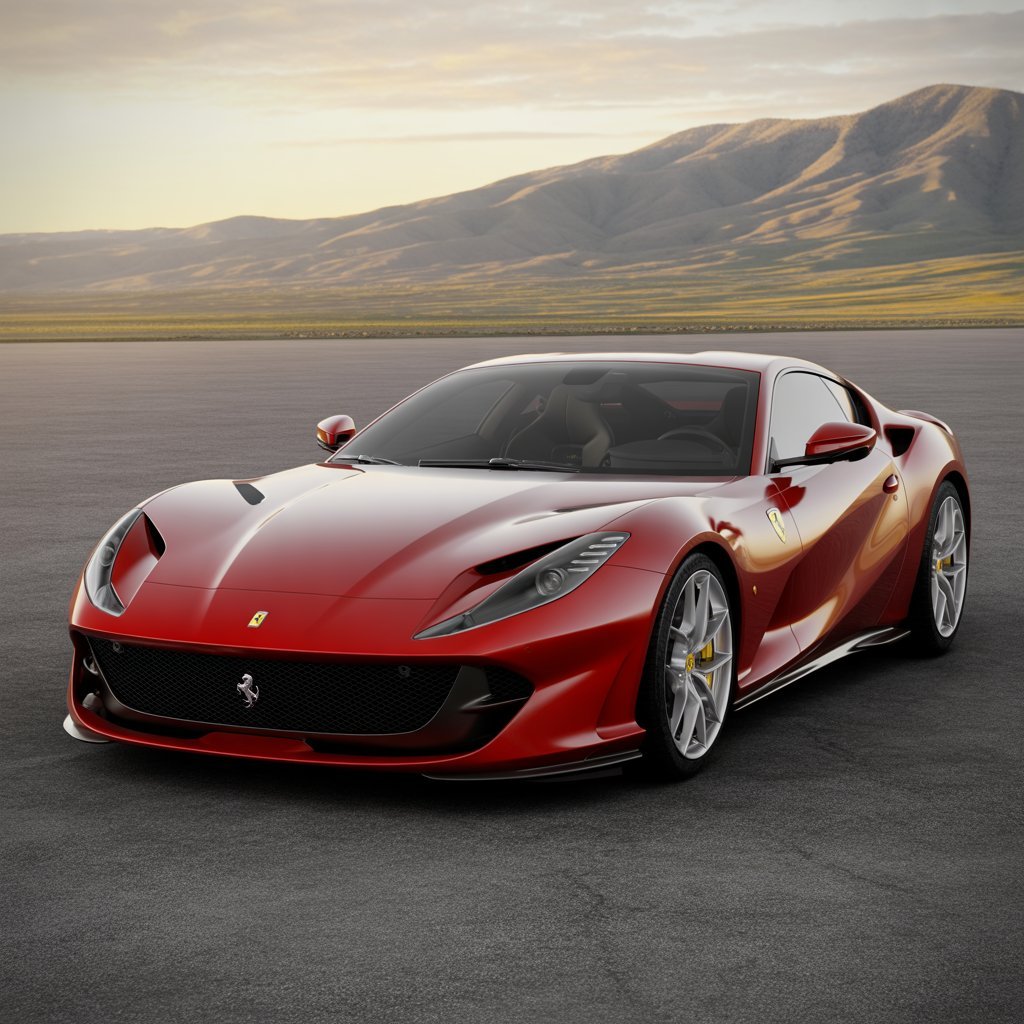
- The Pinnacle of an Era: The 812 represents the zenith of naturally aspirated V12 performance in a front-engined grand tourer from Ferrari. It’s a swansong for a configuration that will likely never be replicated in the same way.
- Emotional vs. Clinical Performance: While newer EVs might be quicker on paper, the 812 offers a more raw, visceral, and emotional driving experience. It’s less about lap times and more about the journey and the connection with the machine.
- Future Collectibility: As mentioned, the rarity of such a pure V12 will only increase. Enthusiasts and collectors who crave the analog feel and sensational sound will flock to these cars, ensuring their value and desirability for years to come.
- Ferrari’s Legacy: The Ferrari 812 Superfast is not just a car; it’s a custodian of Ferrari’s storied V12 legacy. It carries forward a tradition that defines the brand for many.
To put its standing in perspective, let’s consider a quick comparison with a contemporary rival and a next-generation hybrid.
Ferrari 812 Superfast: A Comparison
| Feature | Ferrari 812 Superfast (2017) | Lamborghini Revuelto (2023) |
| Engine | 6.5L Naturally Aspirated V12 | 6.5L Naturally Aspirated V12 + 3 Electric Motors (Hybrid) |
| Combined Horsepower | 789 hp (800 CV) | 1001 hp (1015 CV) |
| 0-60 mph | 2.9 seconds | 2.5 seconds |
| Top Speed | 211 mph (340 km/h) | 217 mph (350 km/h) |
| Drive | Rear-wheel drive | All-wheel drive (V12 powers rear, electric motors power front) |
| Gearbox | 7-speed dual-clutch | 8-speed dual-clutch |
| Weight (Dry) | 1525 kg (3362 lbs) | 1772 kg (3907 lbs) |
| Rear-Wheel Steering | Yes | Yes |
| Powertrain Philosophy | Pure combustion | Performance Hybrid |
| Distinctive Trait | Unadulterated NA V12 sound and linear power | Instantaneous electric torque fill, AWD grip, advanced hybrid tech |
Note : The revuelto is the nest gneration of V12 supercars. ti shows the move towards hybird technology .
While the Revuelto undeniably offers more power and quicker acceleration thanks to its electric assist and AWD, the 812’s appeal lies in its purity. It’s the last hurrah of a certain breed, a more direct and unadulterated connection to the engine’s output.
The Future of the Ferrari 812 Legacy
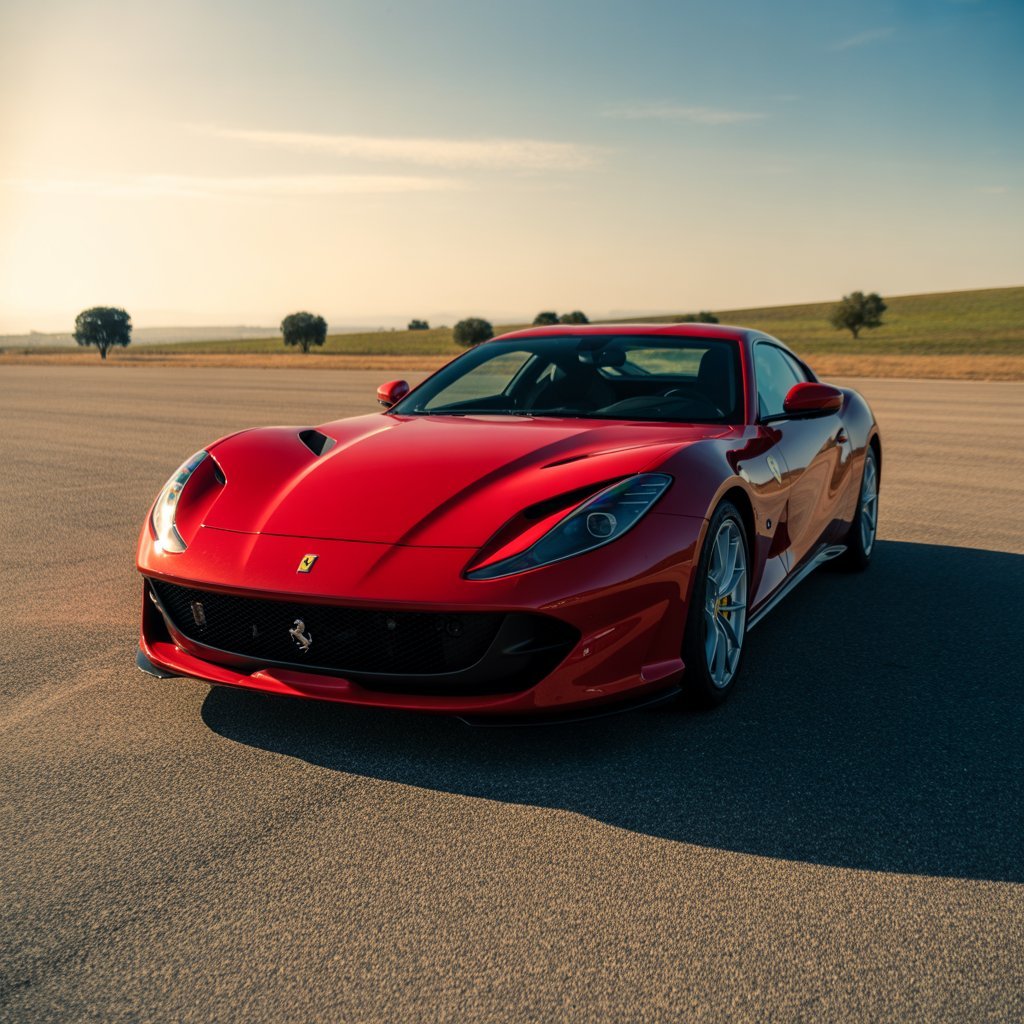
Ferrari themselves are not abandoning the V12, but they are evolving it. The upcoming successors will undoubtedly feature some form of hybridization, as seen with the SF90 Stradale and 296 GTB, and the recently unveiled Lamborghini Revuelto. This makes the pure, naturally aspirated Ferrari 812 Superfast all the more significant.
The future classic status of the Ferrari 812 is almost guaranteed. Its performance is still staggering, its design remains captivating, and its powertrain is a monument to an engineering philosophy that is rapidly becoming confined to the history books. As the world shifts towards a quieter, more electric future, the roar of the Ferrari 812 will become a treasured reminder of a glorious past.
The Special Editions: Competizione and Competizione A
No discussion of the Ferrari 812 would be complete without mentioning its even more extreme brethren: the 812 Competizione and its open-top sibling, the 812 Competizione A. Released later in the 812’s production run, these limited-edition models pushed the envelope even further.
With the V12 engine revving to an astonishing 9,500 rpm and producing 819 horsepower, they represented the absolute pinnacle of Ferrari’s naturally aspirated V12 development. Significant aerodynamic enhancements, including a radical rear diffuser and vortex generators, coupled with weight reduction measures, made them even more track-focused and blisteringly fast.
These cars, in particular, are the embodiment of the V12’s swansong and are already commanding astronomical prices on the collector’s market. They are the ultimate testament to the Ferrari 812 platform’s capabilities and its lasting legacy.
Conclusion: Long Live the King
So, in 2026, is the Ferrari 812 Superfast still the King of V12 Supercars? The answer depends on your definition of “king.” If you’re measuring by outright 0-60 times or the latest in hybrid technology, perhaps not. Newer, electrified rivals will inevitably surpass it in some quantifiable metrics.
However, if “king” signifies the pinnacle of a dying art form, the purest expression of a naturally aspirated V12, an unrivaled symphony of mechanical engineering, and an utterly intoxicating driver’s experience—then the answer is an resounding YES. The Ferrari 812 Superfast reigns supreme as the undisputed monarch of the traditional V12 supercar.
It’s not just a car; it’s a statement. A testament to Ferrari’s unwavering commitment to emotion, sound, and a driving experience that engages every sense. As we hurtle towards an increasingly electric future, the Ferrari 812 stands as a magnificent, glorious reminder of what we stand to lose, and why we should cherish these mechanical masterpieces while they still grace our roads. Its crown, far from slipping, is firmly in place, not just for its performance, but for its profound, irreplaceable soul.