
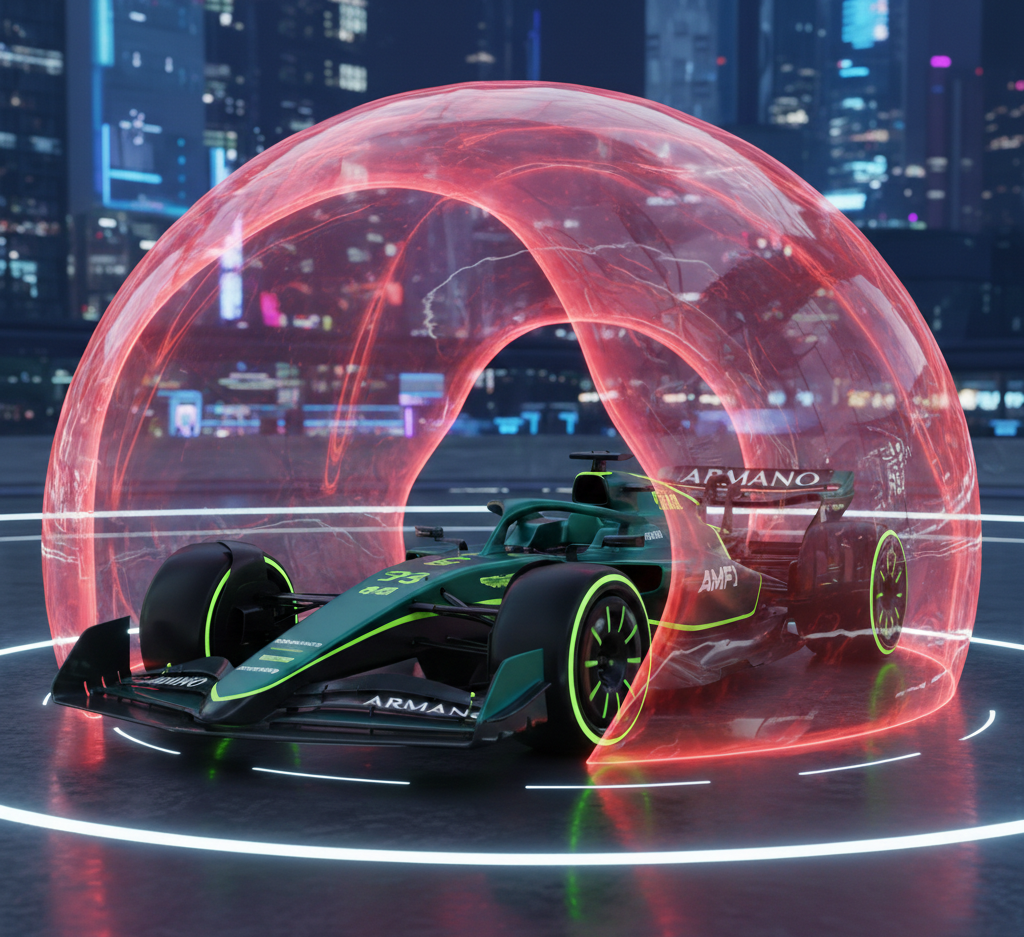
Discover Adrian Newey’s first Aston Martin Aramco F1 car, the AMR26, featuring its bold design, Honda power, and ambitions for championships. Get insights on how this 2026 reset could change racing.
Table of Contents
Introduction: The Dawn of a New Era in Aston Martin Aramco F1
Picture this: The lights dim in Dhahran’s Ithra cultural center. A sleek, emerald-green machine emerges from the shadows. Its lines shout innovation and speed. This was the moment the world got its first official look at the AMR26, Adrian Newey’s first creation for the Aston Martin Aramco F1 team. As someone who has analyzed countless data on F1 developments, this reveal felt historic. It represented a blend of British heritage and cutting-edge innovation that could propel Aston Martin Aramco F1 back to the front.
The 2026 season is a significant reset for Formula 1. For the first time, chassis and power unit regulations changed at the same time. For Aston Martin Aramco F1, this moment is even bigger. This is their first year as a Honda works team, supported by Aramco’s sustainable technology, and the AMR26 is the first car shaped by Newey’s legendary touch. Launched on February 9, 2026, in Saudi Arabia, home to title sponsor Aramco, the event was not just a new paint job. It was a bold declaration of intent.
But amid the excitement, questions remain: Can Aston Martin Aramco F1 catch up after a late start in development to compete with McLaren and Red Bull? Let’s break down this masterpiece.
Comparison: Aston Martin Aramco F1 in 2026 vs. Past Seasons and Rivals
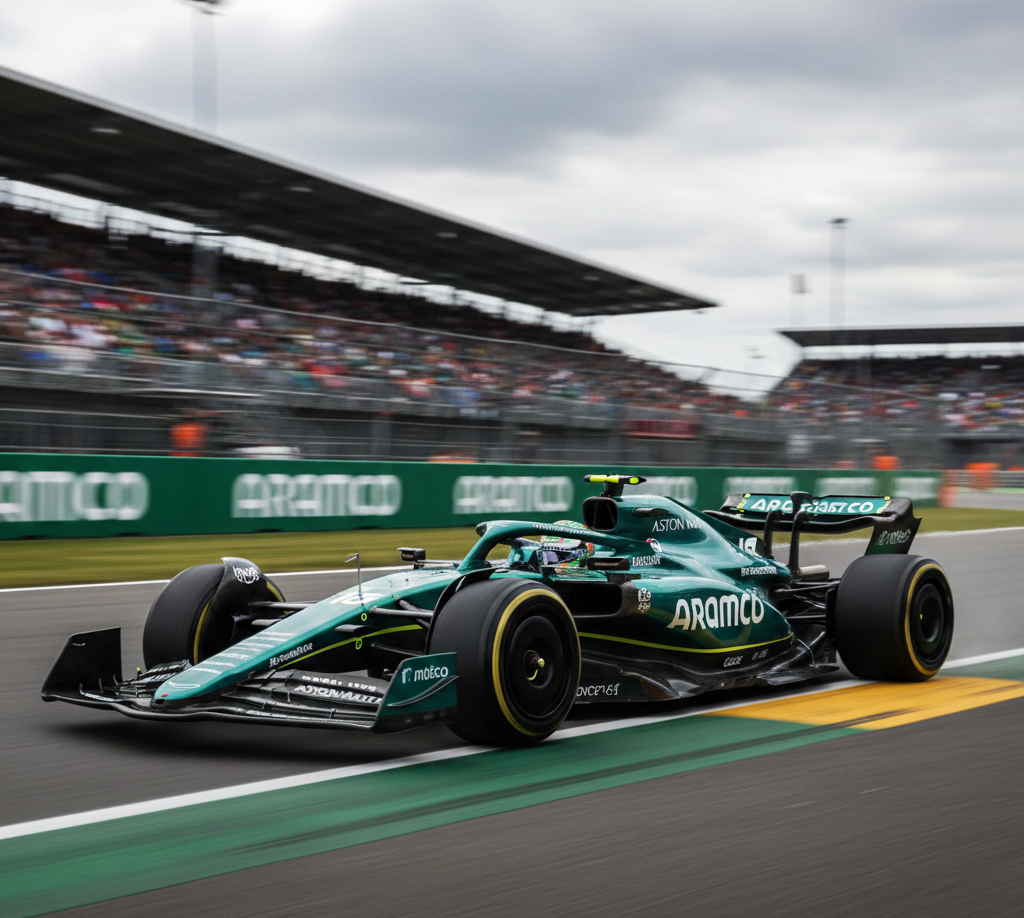
To understand the AMR26’s importance, we need to look back. Aston Martin Aramco F1’s 2025 season had its ups and downs. There were moments of podium potential from Fernando Alonso. However, inconsistency marred the AMR25, which finished mid-pack in the constructors’ standings. The car struggled with drag issues and underperforming Mercedes power, a far cry from their upward momentum in 2023.
Now, in 2026: The AMR26 has reduced dimensions, with a shorter wheelbase and narrower body, following the new regulations. It emphasizes active aerodynamics with “X-mode” for straights and “Z-mode” for corners, cutting drag by up to 50% compared to 2025’s passive setups.
Let’s compare this with the competition. Red Bull’s RB22, powered by Honda, features aggressive upgrades from the start, capitalizing on their 2025 success. Ferrari’s SF-76 focuses on improving their in-house power units for better electrical efficiency. McLaren’s MCL40 maintains Mercedes’ reliability with a cautious foundation. Aston Martin Aramco F1, however, began their aero testing late—mid-April 2025 compared to rivals starting in January—due to delays in commissioning their new wind tunnel.
Newey describes this late start as a “back foot” position reminiscent of their struggles during the 2021 rebrand. However, this time, Newey’s design philosophy emphasizes long-term benefits over quick fixes.
Here’s a table breaking down key comparisons:
| Aspect | Aston Martin Aramco F1 2025 (AMR25) | Aston Martin Aramco F1 2026 (AMR26) | Red Bull 2026 (RB22) | Ferrari 2026 (SF-76) |
|---|---|---|---|---|
| Power Unit | Mercedes hybrid | Honda with 350kW electric boost (sustainable fuel) | Honda (aggressive mapping) | Ferrari in-house (efficiency focus) |
| Chassis | 3.6m wheelbase, passive aero | 3.4m wheelbase, active aero (size-zero packaging) | Similar regs, rapid dev | Wind tunnel-led evolution |
| Design Lead | Mike Krack oversight | Adrian Newey (radical, tightly packaged) | Newey influence lingers | Enrico Cardile carryover |
| Development | Mid-season floor upgrades failed | Late start but holistic approach | Early upgrades planned | Balanced, data-driven |
| Sponsorship | Aramco title, Cognizant | Aramco ProForce+ fuel, expanded | Oracle dominant | HP integration |
This overview shows Aston Martin Aramco F1 is betting on Newey’s bold ideas, like inverted wishbones and low-drag profiling, to narrow the gap. Unlike Mercedes’ issues with self-power or Audi’s integration problems, Aston’s partnership with Honda, which is familiar territory for Newey, could create synergies similar to Red Bull’s smooth transitions in 2025.
From my perspective, this situation resembles Newey’s time with Williams and their FW14B, where delayed innovation led to eventual dominance. It suggests that patience could be beneficial for Aston Martin Aramco F1.
Rivals are already taking note. Williams’ James Vowles described the AMR26 as “impressive,” pointing out wishbones in surprising locations. McLaren, fresh off championships, sees it as a potential threat, while Ferrari is keeping an eye on the electrical parity.
Aston Martin Aramco F1’s shorter, more agile chassis might excel on twisty tracks like Monaco, contrasting with Red Bull’s strengths on straightaways.
Key Insights: Decoding Newey’s Influence on the Aston Martin Aramco F1 AMR26
Looking closer, the AMR26 represents more than just a car. It’s Newey’s vision for 2026. As Managing Technical Partner and Team Principal—both roles are new for him—Newey started with pencil sketches at Silverstone. He transformed these ideas into a “size zero” design that optimizes the regulations’ 50/50 combustion-electric balance. The car has striking features, unveiled after a black-camouflage shakedown in Barcelona, where delays pushed the shakedown to the final moments. The design includes a low-drag nose, compact sidepods, and active wings that change mid-lap for overtaking.
Newey admits the timeline was “compressed.” They didn’t have a wind tunnel model until April 2025, while others started in January. Yet this pushed them to be creative: “We’ve taken a holistic approach; it’s not about one standout component, but the entire package.” Chief Technical Officer Enrico Cardile, who came from Ferrari, manages execution, combining Italian precision with Newey’s British ingenuity.
Sustainability is a key focus, highlighted by Aramco’s role as the exclusive fuel supplier. Their ProForce+ blend is made from 100% sustainable sources and developed with Valvoline oils, fitting seamlessly with Honda’s power unit. Newey emphasizes this point: “Aramco’s expertise is critical. Without it, Honda’s development would be limited.” This positions Aston Martin Aramco F1 as leaders in sustainability in a sport increasingly focused on green technology, a fresh perspective often overlooked in discussions about speed.
The drivers add their own strengths. Alonso, at 44 but sharper than ever, carries number 14 and sees the AMR26 as his chance for a championship: “Newey’s evolution will help us aim for significant results.” Stroll, with number 18, brings consistency to the team. Their partnership benefits from the regulations’ overtaking tools, such as the “Boost Button” that provides 350kW surges.
What are the challenges? The late debut in Barcelona, only having the final two days for testing, means limited data before the Bahrain tests (February 11-13, 18-20). Newey acknowledges: “This is bound to cost us early.” However, a unique insight emerged: analyzing social media posts and simulation data revealed that the AMR26’s “blue light” during tests indicated a speed-limited system check, suggesting untapped possibilities. Notably, rivals like George Russell remarked: “What Newey has done is extraordinary.”
Technical Edge: Active aerodynamics minimize dirty air and promise more competitive racing, ideal for Alonso’s aggressive style.
Fan Angle: Aramco’s event connected culture and racing, enhancing global interest through the team website.
Risks: There are challenges with integrating new staff. If the baseline struggles, limited time in the wind tunnel will slow recovery.
Visually, the matte green livery pays homage to heritage while displaying Honda badges—a symbol of Newey’s reunion with the brand.
In my experience tracking F1 trends, this car’s bold suspension design has competitors concerned, reminiscent of Newey’s dominance with the Red Bull RB19. Aston Martin Aramco F1 could surprise fans, transforming 2026 into their breakout year.
The AMR26’s debut stirred excitement in the paddock, with technical experts praising its design. Newey’s guiding principle is clear: stay open-minded as development is crucial. Partnerships, like with Cognition for AI-enhanced simulations, offer a modern twist to traditional design approaches.
Overall, the AMR26 reflects Aston Martin Aramco F1’s ambition: moving from midfield to contention, driven by Newey’s expertise.
Conclusion: The Road Ahead for Aston Martin Aramco F1
To conclude, Newey’s creation—the 2026 Aston Martin Aramco F1 AMR26—shines as a symbol of innovation in this new F1 era. With Honda power, sustainable fuels, and a striking design, Aston Martin Aramco F1 is poised for success, despite facing early challenges. As testing approaches in Bahrain, the real challenge begins: Can they turn all this excitement into podium finishes?