
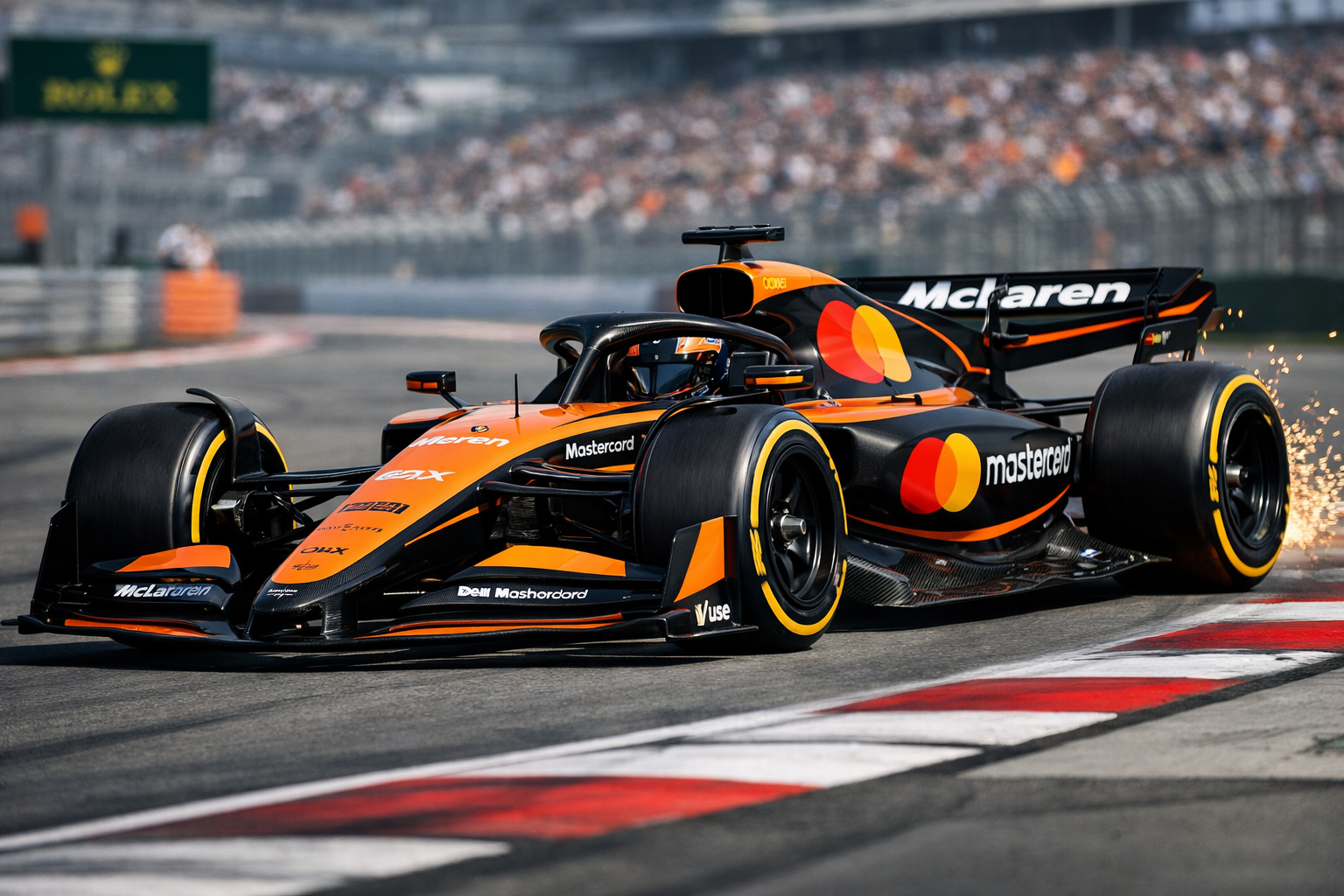
Explore the 2026 McLaren F1 team’s bold new era with Mastercard sponsorship, new regulations, and strategies to defend their titles. Discover fresh insights on the MCL40, drivers, and what it means for racing fans
Table of Contents
Introduction: The Roar of a New Dawn in McLaren F1
Imagine the thunderous engines roaring under the Bahrain sun, papaya orange shining against the desert horizon. That’s the scene as the McLaren F1 team revealed their 2026 challenger, the MCL40, starting an exciting chapter in Formula 1 history. As a lifelong racing fan who’s followed McLaren F1 through their highs and lows, this moment felt electrifying—a mix of nostalgia for their rich past and excitement for the future.
The 2026 season is not just another year; it’s a major shift. With Mastercard stepping in as the official naming partner, the team is now the McLaren Mastercard Formula 1 Team. The partnership promises greater fan access through initiatives like Team Priceless. This arrangement, announced in August 2025, brings new energy to McLaren F1, following their back-to-back Constructors’ Championships in 2024 and 2025. But with sweeping new regulations changing the cars, power units, and even overtaking dynamics, can McLaren F1 defend their title? Let’s explore how this evolution could transform racing.
formula1.comFIRST LOOK: McLaren unveil new livery for 2026 F1 season as they …
Comparison: McLaren F1 in 2026 vs. Previous Eras and Rivals
To appreciate the 2026 McLaren F1 setup, we need to compare it with the past. The ground-effect era from 2022 to 2025 focused on underbody aerodynamics, causing porpoising challenges at first but ultimately creating closer racing. McLaren F1 adapted well, moving from midfield contenders to dominant champions with the MCL38 and MCL39. Now, 2026 introduces active aerodynamics; think front and rear wings that adjust on the fly in “X-mode” for low drag on straights and “Z-mode” for high downforce in corners.
Compared to rivals, McLaren F1’s approach stands out. While teams like Red Bull and Ferrari have hinted at aggressive early upgrades to take advantage of the new rules, McLaren F1 is focusing on understanding rather than rushing. Team Principal Andrea Stella stressed this at the MCL40 launch, pointing out that the car seen in pre-season testing at Barcelona will be mostly the one racing in Australia. This is different from Haas, who plan major updates between tests and the first race.
Here’s a quick table comparing key aspects of McLaren F1’s 2026 setup against 2025 and selected competitors:
| Aspect | McLaren F1 2025 (MCL39) | McLaren F1 2026 (MCL40) | Red Bull 2026 (RB22) | Ferrari 2026 (SF-76) |
|---|---|---|---|---|
| Power Unit | Mercedes hybrid (E10 fuel) | Mercedes with 50% electrical power boost (sustainable fuel) | Honda (new regs) | Ferrari (in-house) |
| Chassis Dimensions | 3.6m wheelbase | 3.4m wheelbase (shorter, narrower) | Similar regs compliance | Similar regs compliance |
| Aerodynamics | Passive ground effect | Active aero (X/Z modes) | Aggressive dev focus | Wind tunnel emphasis |
| Development Strategy | Mid-season upgrades | Understanding-first, minimal early changes | Rapid upgrades | Balanced evolution |
| Sponsorship Impact | OKX as title partner | Mastercard naming rights ($100M/year) | Oracle dominant | HP integration |
This table shows that McLaren F1’s cautious strategy could pay off in a reset era, similar to their patient rebuild after their struggles in the 2010s. Unlike Mercedes, who are dealing with their own power unit issues in 2026, McLaren F1 continues with proven Mercedes technology, which may give them an edge in reliability. Competitors like Audi, entering as a works team, face integration challenges, while Cadillac’s newcomer status adds unpredictability.
From my viewpoint, having witnessed countless sim races mimicking these regulations, the shorter wheelbase makes McLaren F1 cars more agile, reminiscent of the nimble vehicles from the 1980s turbo era—a golden time for McLaren F1 with legends like Senna and Prost.
Key Insights: Unpacking the 2026 McLaren F1 Revolution
Looking closer, the 2026 regulations represent the biggest change in decades, combining sustainability with excitement. Power units now provide nearly equal power from internal combustion and electrical energy, increasing from 120kW to 350kW electric output. For McLaren F1, this means a “Boost Button” for overtakes, potentially leading to “unexpected overtaking maneuvers,” as McLaren’s Technical Director Mark Temple suggests.
The MCL40’s design shows careful planning. Chief Designer Rob Marshall shared that, despite being reigning champions, McLaren F1 operates with only 70% of the wind tunnel time that lower teams get—a disadvantage they’re countering with smart simulation. Unlike previous cars, the MCL40 goes back to basics, inspired by but not copying its predecessors. Stella describes it as a “complete competitive reset,” where every team starts from zero.
Mastercard’s role adds a unique element. Beyond the estimated $100 million annual deal until the mid-2030s, it introduces Team Priceless, offering fans pits walks, driver meet-and-greets, and even strategy sessions. This isn’t just branding; it’s a new way to engage fans in McLaren F1, transforming passive viewers into active participants. Imagine winning a contest to join Lando Norris for a hot lap that’s the priceless access they promise.
Drivers remain a strong point. Lando Norris, the 2025 champion, enters with the #1 plate, showing great maturity. Oscar Piastri, always calm and collected, perfectly complements him. Stella aims to simplify intra-team rules for 2026, avoiding past conflicts. From my perspective, this duo could excel under the new regulations, where electrical boosts reward careful energy management—a specialty of Piastri.
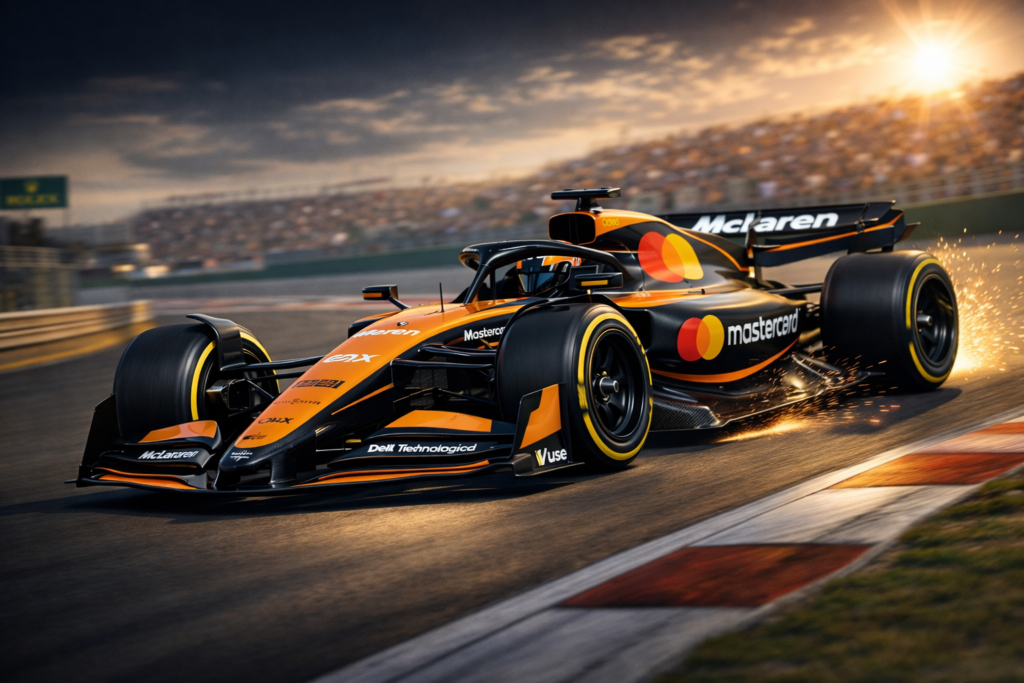
Visually, the livery updates the classic papaya with black accents, showcasing partners like OKX, Google, and Dell. It honors McLaren F1’s history while looking forward.
reddit.comMcLaren and Mastercard coy on potential F1 title partnership: r …
Challenges are on the horizon. Limited testing (three days pre-season) means McLaren F1 misses day one in Barcelona to maximize build time. Stella admits the workload was “unprecedented,” with simultaneous chassis, engine, and tire changes. Despite this, it could foster innovation, just as McLaren F1’s wind tunnel investments paid off in 2024.
A fresh insight: The regulations’ focus on sustainability (100% sustainable fuel) aligns with McLaren F1’s values, possibly attracting eco-conscious sponsors and fans. In a sport often criticized for its carbon footprint, this positions McLaren F1 as a forward thinker.
Fan Impact: Team Priceless could enhance global engagement, with X posts buzzing about exclusive experiences.
Technical Edge: Active aero may lessen dirty air effects, enabling more overtakes—benefiting McLaren F1’s aggressive drivers.
Risks: If the baseline MCL40 underperforms, limited development time could hinder recovery, unlike rivals with more resources.
Overall, the 2026 McLaren F1 setup merges tradition with change, providing a roadmap for success in uncertain times.
Conclusion: Revving Up for the Future of McLaren F1
As this deep dive comes to a close, it’s clear that the 2026 McLaren Mastercard Formula 1 Team is set for greatness. From the innovative design of the MCL40 to Mastercard’s focus on fans, McLaren F1 is not just participating; they’re changing the sport. With Norris and Piastri leading the way, and regulations promising exciting battles, this could be McLaren F1’s most memorable era yet.
What do you think? Will McLaren F1 secure a three-peat, or will rivals take the spotlight? Share your thoughts in the comments, subscribe for more F1 insights, and check out related posts on 2026 F1 regulations. For the latest updates, follow McLaren on their official site. Let’s keep the conversation going!
1 thought on “The 2026 McLaren Mastercard Formula 1 Revolution-Defending Glory in a New Era of McLaren F1”