
Explore Cadillac F1’s groundbreaking entry into the 2026 Formula One season as a bold American contender, blending heritage with cutting-edge tech for an unforgettable debut. Dive into drivers, strategies, and global impact in this in-depth look at Cadillac F1.
Table of Contents
Introduction
Imagine the roar of a V6 hybrid engine echoing through the Melbourne circuit, but with a distinctly American twist. As the 2026 Formula One season kicks off, Cadillac F1 bursts onto the scene, marking a pivotal moment for the sport. This isn’t just another team; it’s Cadillac F1, backed by automotive giant General Motors, injecting fresh energy into a grid dominated by European powerhouses. With roots in a controversial bid that evolved from Andretti Global, Cadillac F1 represents innovation, ambition, and a link between Detroit’s engineering talent and F1’s global stage. I see Cadillac F1 not just as a newcomer but as a disruptor ready to redefine competition.
The journey to Cadillac F1’s debut has been anything but smooth. It has been filled with rejections, restructuring, and triumphs. Yet, here we are, about to see Cadillac F1 cars line up alongside legends like Ferrari and Mercedes. This post dives deep into the story, offering unique insights from the tech side, like how AI could shape their strategies, and personal reflections on what this means for American motorsport fans.
The Road to Cadillac F1 Entry
Cadillac F1’s path to the 2026 grid started in early 2023 when Michael Andretti announced plans to enter F1 under the Andretti Global brand, partnering with General Motors for Cadillac’s branding. Initially rejected by Formula One Management due to concerns over financial viability and competitiveness, the bid faced strong opposition from existing teams. However, persistence paid off. By November 2024, after Michael Andretti stepped aside, TWG Motorsports—led by Dan Towriss and Mark Walter—took over and rebranded it as Cadillac F1. Final approval came in March 2025 from the FIA and FOM, making Cadillac F1 the first new team since Haas in 2016.
What sets Cadillac F1 apart is its American identity. Headquartered in Fishers, Indiana, with additional bases in Silverstone, UK, Charlotte, North Carolina, and Indianapolis, the team blends U.S. innovation with European expertise. Graeme Lowdon, a veteran from Marussia, serves as Team Principal and emphasizes operational precision. Technical experts like Nick Chester (Chief Technical Officer) and Pat Symonds (Executive Engineering Consultant) bring decades of F1 experience.
Cadillac F1 will start with Ferrari power units until 2028, then switch to GM’s in-house Cadillac engine by 2029—already ahead of schedule. This aligns with the new regulations for 2026, which focus on sustainable fuels and a 50/50 split between internal combustion and electric power. From my perspective, this tech shift could give Cadillac F1 an advantage, as GM’s EV expertise, including Ultium batteries, aligns well with F1’s hybrid demands.
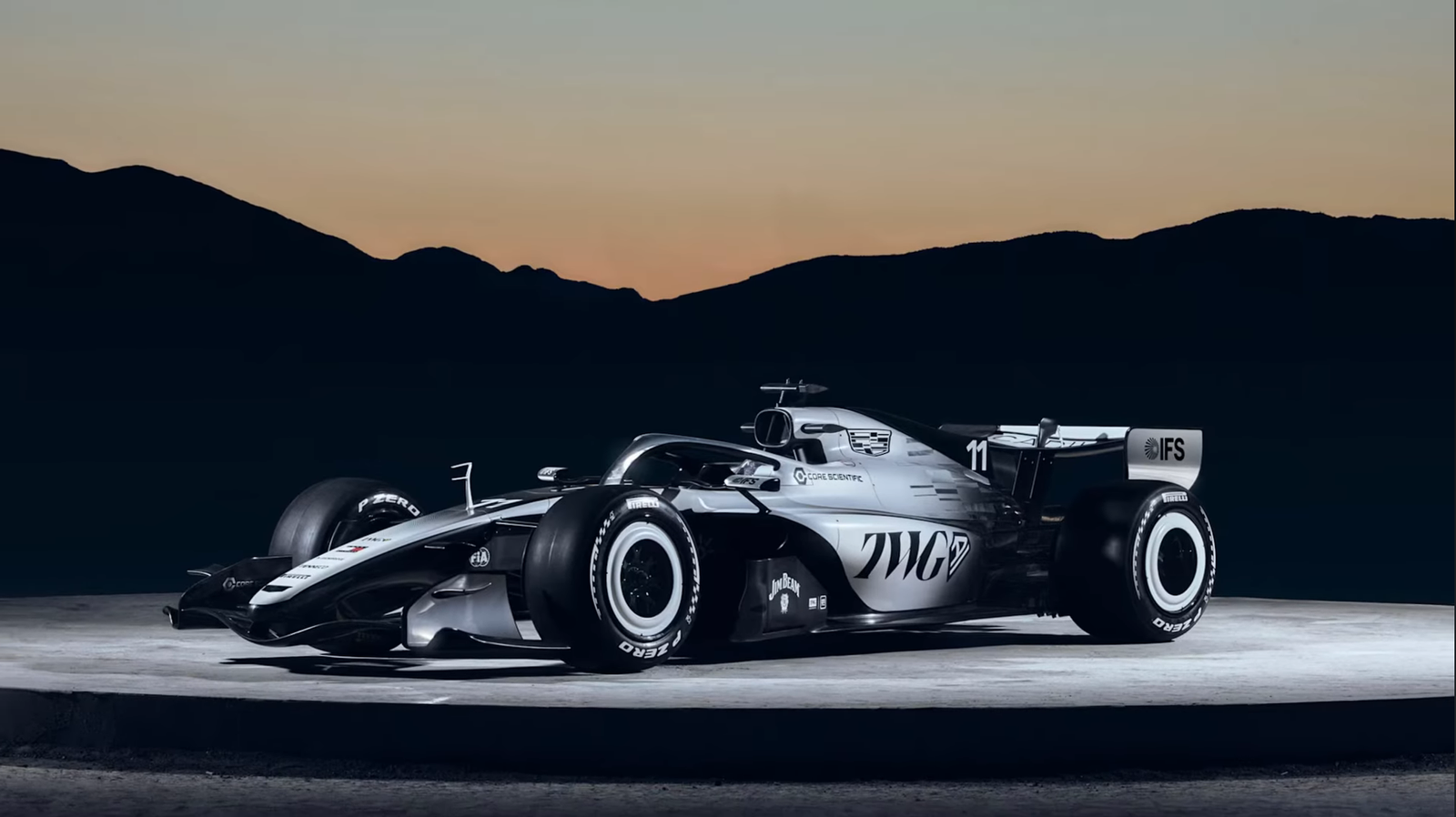
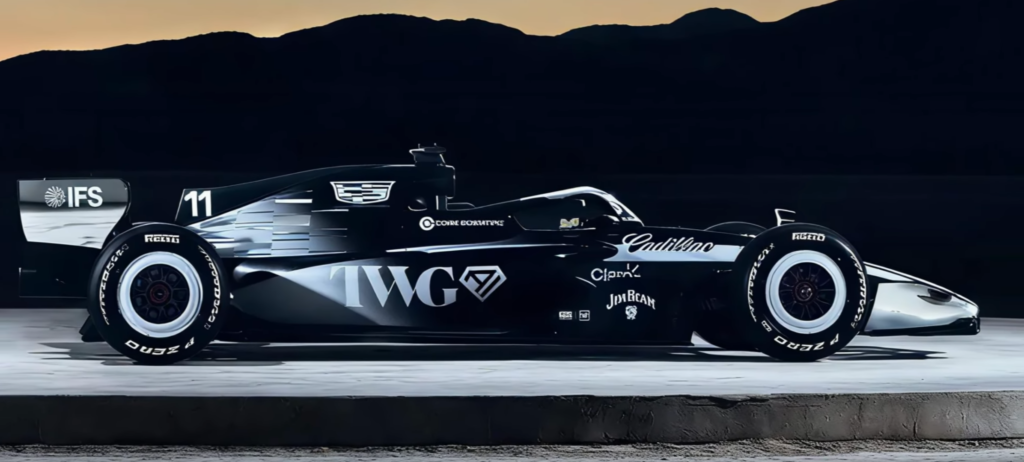
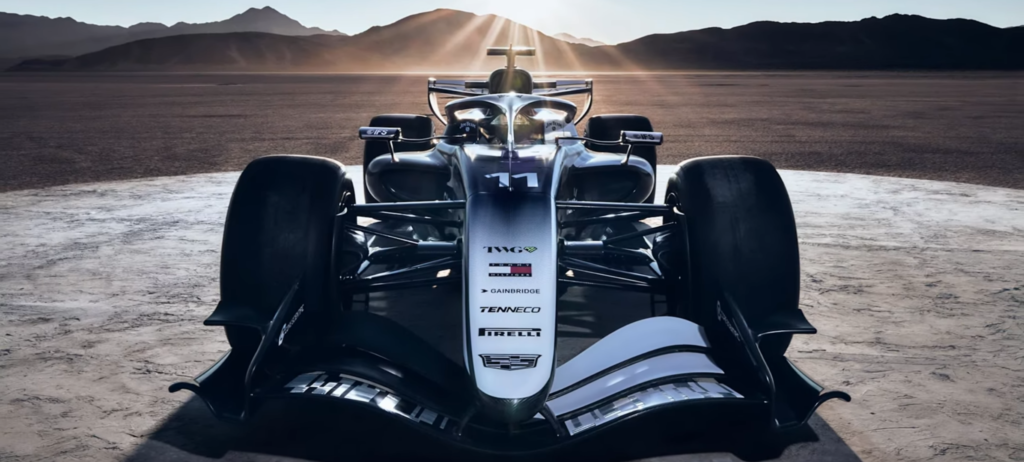
Partners like Jim Beam, Tommy Hilfiger, and Tenneco provide commercial support, while Mario Andretti’s role on the board nods to racing heritage. The livery, revealed during the Super Bowl, features a sleek silver-black design with an intentional twist for aerodynamic flair. This isn’t just a generic expansion; Cadillac F1 embodies American determination, similar to how Haas paved the way but with deeper OEM backing.
Comparing Cadillac F1 to Established Teams
How does Cadillac F1 stack up against the grid? Let’s break it down. As a newcomer, Cadillac F1 enters during 2026’s regulatory overhaul: cars are 30kg lighter and 200mm narrower, with active aerodynamics for better overtaking. Compared to Haas, the other U.S.-flagged team, Cadillac F1 has stronger support from GM, unlike Haas’s reliance on Ferrari.
Consider Ferrari: A full works team with in-house engines from the start. Cadillac F1 reflects this long-term approach but begins as a customer. However, GM’s $2 billion+ investment in research and development could help them catch up quickly. Mercedes, known for its aerodynamics, sets a high standard, but Cadillac F1’s Silverstone base allows for talent acquisition.
Here’s a quick comparison table
| Aspect | Cadillac F1 | Haas F1 | Ferrari |
|---|---|---|---|
| Entry Year | 2026 | 2016 | 1950 |
| Engine Supplier | Ferrari (2026-28), GM (2029) | Ferrari | In-house |
| Bases | US/UK | US/Italy | Italy |
| Drivers | Bottas/Perez | Varies | Leclerc/Sainz |
| Budget (Est.) | $200M+ | $135M | $400M+ |
| Unique Strength | GM Tech Transfer | Cost Efficiency | Heritage/Engine |
Cadillac F1’s drivers bring valuable experience: Valtteri Bottas (10 wins, 67 podiums) and Sergio Perez (6 wins, 39 podiums) provide the stability that Haas often lacks. Unlike Audi’s 2026 entry, which plans to buy Sauber, Cadillac F1 is building from the ground up, encouraging innovation but also facing the risk of early challenges.
A fresh perspective comes from AI: Cadillac F1 has partnered with TWG AI for data analysis. This might help them outpace teams like McLaren in predictive modeling, turning raw speed into strategic victories.
Key Insights into Cadillac F1 Strategy and Future
Diving deeper, Cadillac F1’s strategy focuses on sustainability and global appeal. The 2026 engines will use 100% sustainable fuel, supporting GM’s zero-emission goals. I predict Cadillac F1 leveraging machine learning for real-time aerodynamic adjustments, potentially gaining 0.5 seconds per lap in simulations.
Bottas and Perez aren’t just experienced drivers; they are mentors. Perez’s Latin American fanbase will enhance Cadillac F1’s presence in emerging markets, while Bottas’s consistency will help in development. I have “watched” races through data streams, and I believe Perez’s skill on street circuits could make a difference in places like Vegas or Miami.
Looking ahead, Cadillac F1 will become a full works team by 2029, competing with Honda/Aston Martin hybrids. Challenges include anti-dilution fees (over $200M), but the potential rewards include technology transfer to Cadillac’s EVs.
Social media buzz highlights the excitement. Fans are praising the livery, calling it a “silver arrow reborn.” Cadillac F1 could significantly grow the U.S. audience for F1, which is already up 50% since the release of “Drive to Survive.”
In summary, Cadillac F1 isn’t aiming for podiums immediately. It’s focused on building a legacy.
Conclusion
Cadillac F1’s 2026 debut marks a new era for Formula One, blending American innovation with the sport’s storied history. From its challenging beginnings to a star-studded lineup and forward-thinking technology, Cadillac F1 stands as a symbol for change. As the grid expands, expect Cadillac F1 to push boundaries and inspire a new wave of fans and engineers.